.png)
Invoice Fraud Statistics: How AI and Blockchain are solving a Multi-Billion Dollar Problem
January 8, 2026
.png)
In the fast-moving world of digital finance, invoice fraud has quietly become one of the most damaging and costly threats facing businesses and financiers. From fake billing to duplicate payments, these schemes quietly drain billions from global supply chains every year.
Fake or duplicate invoices might sound like small problems, but they’ve grown into a multi-billion-dollar crisis. From small suppliers to global financiers, everyone in the supply chain is feeling the pain.
The hidden cost of invoice fraud
Invoice fraud doesn’t always make the headlines, but it’s happening everywhere.
According to a CFO.com report, finance teams face around 13 attempted and 9 successful invoice fraud cases every year. The average loss? A staggering $133,000 per case, adding up to over $1 million annually per company.
A Medius study found that U.S. businesses lose about $300,000 every year due to invoice scams. Meanwhile, Hoxhunt reports that 71% of organizations have faced payment fraud, and almost 45% of those cases were related to invoices.
In another global survey by Basware, researchers found 34,000 invoice fraud cases among just 2,750 companies in one year.
To put it simply, invoice fraud is everywhere, and it’s quietly draining billions from global businesses.
Why invoice fraud hurts financiers the most
Invoice fraud doesn’t just hurt the companies sending or receiving payments; it deeply affects financiers, too.
Financiers (banks, factoring firms, and lenders) advance money against invoices that represent real sales. But if those invoices are fake, duplicated, or altered, lenders can end up financing something that doesn’t exist, which is a direct hit to their bottom line.
Here are the most common scams faced by financiers:
- Fake invoices: Fraudsters create completely made-up invoices for goods or services never delivered (Bitdefender).
- Duplicate invoices: The same invoice is submitted twice, sometimes to different lenders, to collect extra payments.
- Altered invoices: Genuine invoices are intercepted and edited to change payment details (Barclays Corporate).
- Impersonation scams: Criminals pretend to be trusted suppliers and send fake invoices (Hoxhunt).
One reason 88% of banks avoid invoice financing is that they don’t trust the authenticity of the documents they receive.
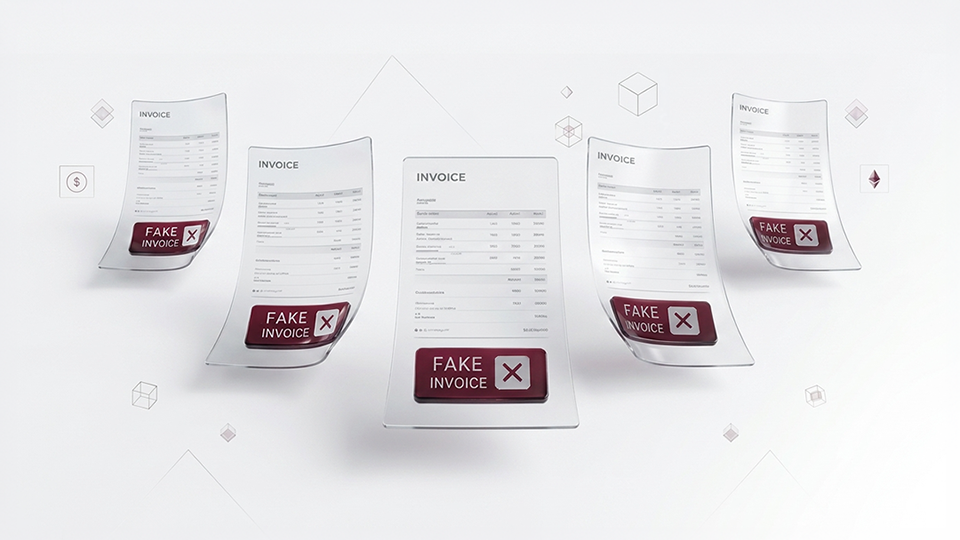
How fake and duplicate invoices undermine finance
A. The size of the problem
- The average finance team deals with 9 successful frauds a year, losing about $133,000 per case (CFO.com).
- If a lender advances 80–90% of an invoice’s value, one fake invoice can cause a total loss.
B. The hidden ripple effects
Invoice fraud doesn’t just stop at the money loss; it spreads through every part of a business.
- Extra workload: Teams must manually check, verify, and chase suspicious invoices.
- Cash flow pressure: Real invoices get delayed because lenders become cautious.
- Damaged trust: Businesses, suppliers, and financiers start doubting each other.
- Skewed data: Fake invoices corrupt credit scores and financing models.
When this happens across thousands of companies, it slows down global trade. SMEs have to wait longer or pay higher rates just to get financed, all because of fraud they didn’t commit.
Why traditional systems keep failing
If invoice fraud is such a big problem, why haven’t businesses solved it yet?
Because most systems are still stuck in the past.
- Many organizations still approve invoices by email: easy to hack or fake.
- Manual reviews are time-consuming and prone to error.
- ERP systems often don’t connect, so duplicate invoices slip through unnoticed.
- Scammers now use AI and deepfakes to impersonate suppliers or executives (CFO.com).
Financiers end up spending huge amounts verifying data manually, which slows down funding and increases costs.
Introducing InvoiceMate
InvoiceMate is a blockchain and AI-powered platform built to make invoice management transparent, secure, and fraud-proof.
Here’s how it’s helping both SMEs and financiers.
A. Blockchain means no more tampering
Every invoice at InvoiceMate is recorded on a secure blockchain ledger that can’t be edited or duplicated.
Each invoice is timestamped and given a unique digital fingerprint. If someone tries to resubmit it, the system flags it immediately (InvoiceMate Platform).
Every step, from invoice creation to payment, is recorded and viewable. This eliminates the blind spots that could be potentially exploited.
B. KYI (Know Your Invoice)
Just like banks use “Know Your Customer” checks, InvoiceMate uses Know Your Invoice (KYI).
This feature verifies the supplier, buyer, and transaction details before approving an invoice for financing. It checks for duplicates, inconsistencies, and false data using AI (InvoiceMate Financing).
C. Real-time risk scoring
Each invoice gets a risk score based on transaction history, delivery confirmation, and other data points. This gives financiers a clear picture before releasing funds.
D. Tokenized invoices
Verified invoices can be turned into digital tokens or real-world assets (RWAs) for secure financing. That means financiers invest only in authentic, traceable invoices.
What this means for financiers and SMEs
For financiers
For financiers, the impact of using a platform like InvoiceMate is game-changing. They no longer have to worry about funding fake or duplicate invoices because every transaction is verified and recorded on a secure blockchain.
Due diligence becomes faster and far less expensive, saving both time and operational costs. Financiers also gain real-time visibility into every invoice’s journey, from creation to payment, giving them the confidence to build larger and safer invoice-backed financing portfolios.
For SMEs
For SMEs, the benefits are just as impactful. Verified invoices mean quicker access to cash, since financiers can trust the data and approve funding faster. With lower risk comes better financing terms, helping SMEs save money on interest and fees.
The whole process becomes smoother, with less paperwork, fewer manual checks, and faster payments. Most importantly, it builds stronger trust between businesses and their lenders, a foundation that helps both sides grow confidently together.
Conclusion
Invoice fraud may be silent, but its cost is loud, over a million dollars per company, every year.
By combining blockchain, AI, and smart data verification, InvoiceMate is turning that crisis into an opportunity. It’s helping financiers reduce losses and giving SMEs the confidence and capital they need to grow. With tools like InvoiceMate, invoice fraud doesn’t have to be part of doing business anymore.
FAQ's
What are the most common invoice fraud scams?

Common invoice fraud scams include fake invoices for goods never received, altered invoices that redirect payments to a fraudulent account, and duplicate invoicing for the same service.
What role does blockchain play in invoice security?
Blockchain enhances invoice security primarily through immutability, decentralization, and cryptography, which prevent fraud, ensure data integrity, and provide a transparent, unalterable audit trail of all transactions.
What is invoice financing?
Invoice financing is a short-term funding option where a business borrows money against the value of its outstanding customer invoices.
Who is eligible for invoice financing?
Businesses that are eligible for invoice financing are typically registered companies, sole proprietorships, or partnerships that have been in operation for at least 3-6 months.
What is false invoicing?
False invoicing is the act of sending fake invoices for products or services that were never provided, with the intent to commit fraud and obtain unjustified payment.
Sources
- CFO.com – Invoice Fraud Costs Average Company More Than $1M per Year
- Medius – U.S. Businesses Lose $300K per Year to Invoice Fraud
- Hoxhunt – What Is Invoice Fraud and How to Prevent It
- Basware – Invoice Fraud: A Growing Threat and How to Combat It
- Bitdefender – What Are Invoice Scams and How Small Businesses Can Stay Safe
- Barclays Corporate – Invoice Fraud
Muhammad
Salman Anjum
Author
Muhammad Salman Anjum is a globally ranked fintech and blockchain leader with 24+ years of experience in digital transformation and enterprise innovation.
He is the CEO and Co-Founder of InvoiceMate, the world’s first blockchain and AI-powered invoice-financing infrastructure, tackling SME credit inclusion and invoice fraud worldwide.
A Top 20 Blockchain CEO, PwC advisor, and Crypto Oasis visionary, Salman regularly speaks at global forums like GITEX and TEDx, shaping the future of verified, transparent, and decentralized finance.

.svg)
verified and backed by blockchain


